Edge vs Cloud Analytics for Industrial Equipment, Explained
Compare edge and cloud analytics for industrial equipment across latency, security, and portfolio visibility, and see which layer should own real-time control.
Edge vs cloud analytics splits every industrial operation into two questions at once: where should data processing happen, and which layer should own real-time control.
Production lines generate a flood of sensor data, and where analytics run shapes how fast equipment responds, what moving that data costs, and how secure operations stay. Edge computing runs the work close to the machine. Cloud computing centralizes it for scale.
What edge computing and cloud computing mean for industrial equipment
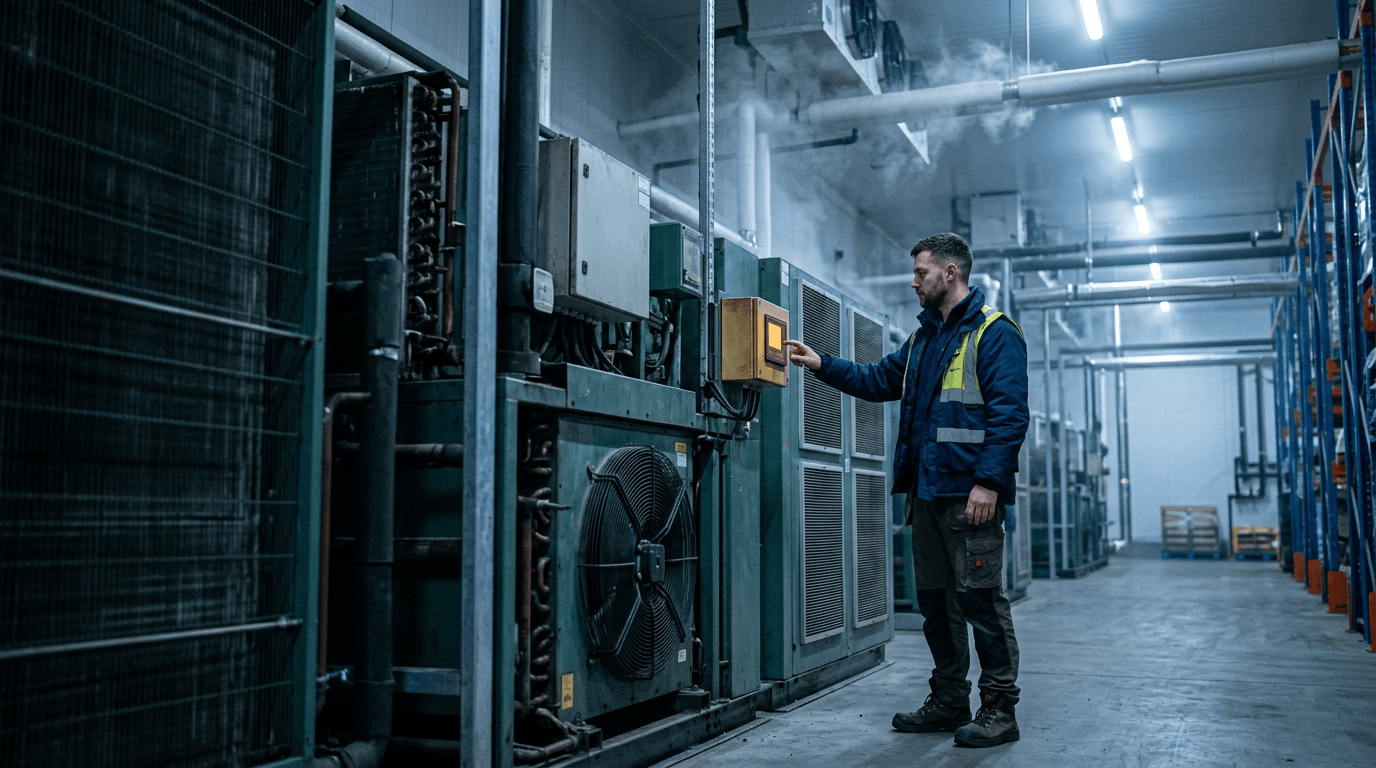
Edge computing runs analytics on or near the machine, using edge devices such as industrial controllers, gateways, IoT devices, and edge nodes that process data locally, the same connected-device layer covered in this guide to Industrial IoT (IIoT). Because processing data happens at the network's edge, decisions land in milliseconds with no round trip to a data center.
Cloud computing takes a wider view. Cloud computing moves machine data across the computer network to centralized data centers, where cloud platforms handle the heavy work:
- Compute and storage: the computing power and data storage to analyze many connected devices and smart devices at once
- Shared infrastructure: IT infrastructure spanning virtual machines and cloud servers for storing data, governed centrally across one cloud environment
- Portfolio scale: aggregate data, long-term data storage, and analysis no single machine could run alone
Both matter. Edge solutions handle the fast, local processing that keeps a compressor inside spec, and edge data stays close to the equipment. Most operators pair cloud and edge computing, so the real choice is how to divide the workload.
Cloud and edge computing compared across data processing and control
To see the split, weigh cloud and edge computing against the factors that decide where data processing runs:
Across manufacturing operations, edge computing solutions own the fast decisions and cloud computing owns the broad ones.
What are the benefits of edge computing for real-time control?
The benefits of edge computing come down to speed and independence:
- Real-time response: rather than waiting on a central cloud, edge computing keeps processing data locally and handles real time processing even when the link is down
- Safety and uptime: that logic on edge nodes holds product in spec and keeps ammonia refrigeration systems safe
- Works when the network does not: control continues at sites in remote locations where reliable connectivity over wireless networks is never guaranteed
Real-time control is the clearest case for edge computing. Alarm response and load-shifting during a demand event depend on low latency decisions made in milliseconds. At US Foods, Nick Weaver's team reached a 75% reduction in alarms and shifted to a hands-off demand response that no longer sends anyone on site. That is one of the key benefits smart factories chase, and it drives increased operational efficiency without adding staff.
When edge solutions own the decision
Edge solutions own any decision where a delay causes harm. That logic belongs on edge systems at the plant when:
- a few seconds of latency could push product out of spec or trip a safety limit
- a control setpoint must hold on edge systems without waiting on the cloud
- edge data needs to stay on the machine
Slower work becomes a candidate for cloud computing.
Why portfolio data analytics belongs in cloud infrastructure
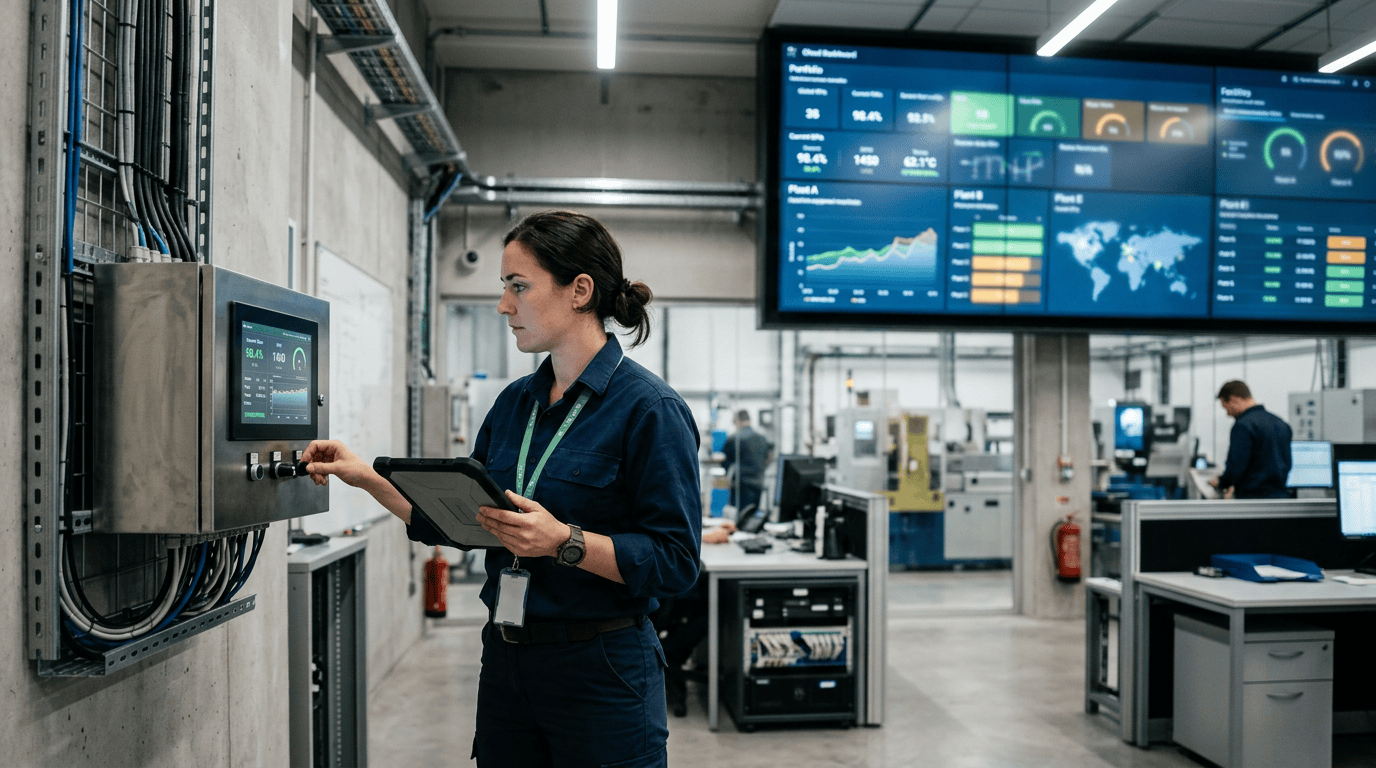
Portfolio data analytics belongs in cloud infrastructure because the most useful patterns surface only when machine data from every site sits together. A single facility sees its own equipment, while cloud platforms see the whole fleet, where cross-site benchmarking, energy optimization, and continuous improvement become possible.
The ATLAS Enterprise Control Platform (ECP) connects existing OEM controls to cloud computing and standardizes that data flow so teams can act on it portfolio-wide. This is the territory of industrial analytics, and cloud computing scales it in ways no plant floor can:
Delivered through cloud infrastructure, disciplined industrial energy management has cut energy costs by 21% on average.
Advanced analytics that only cloud scale makes possible
Advanced analytics like predictive maintenance, machine learning, and fleet-wide artificial intelligence need more computing power and history than any edge device holds. Cloud services train models on years of pooled data, then push strategies back to the machine:
- Predictive maintenance: flags a failing bearing across similar machines
- Machine learning: tunes energy use against live utility rates
- Fleet-wide intelligence: finds patterns no single site sees alone
Data management at this scale suits cloud providers, centralized cloud resources, and public cloud data centers.
Request a demo to see ATLAS turn portfolio data analytics into governed, repeatable action.
Securing data transmission across edge and cloud systems
Security plays out differently at each layer, and both edge and cloud systems carry tradeoffs:
Both layers sit inside a wider plant architecture, and how the Purdue Model maps plant network layers is still the standard way to decide which conduits between them need controls.
The workable answer protects both layers with consistent data security: keep critical data and safety logic local, encrypt everything between plant and cloud, and govern access centrally. Federal guidance on securing operational technology from NIST is worth reviewing before rollout, because mature cloud platforms let leadership set standards across the same infrastructure while sites keep operating through an outage.
Planning your edge deployment across a cloud and edge model
Planning an edge deployment begins with one question for every workload: does a delay cause harm?
- Yes, a delay causes harm runs the processing tasks at the edge
- The decision needs cross-site context or long histories goes to cloud computing
That test drives a healthy cloud and edge model, where the control loop stays local and the learning loop goes to the cloud. This division sits at the heart of software-defined automation, where control logic is governed in software and executed on edge devices near the equipment. A lean team runs consistent strategies across dozens of sites without ripping out existing controls, which modern manufacturing processes need as expertise retires.
Edge cloud coordination during a grid event
An edge cloud split proves its worth during a coincident-peak demand response event:
- Cloud computing sets the portfolio strategy, forecasting rates and choosing which sites curtail
- Edge computing runs load-shifting locally in real time at each site
Americold's team weathered a Northeast heat wave this way, coordinating a fleet-wide response from the cloud while every facility acted locally.
Edge and cloud, working together
The strongest design is a deliberate edge cloud infrastructure. A hybrid cloud and edge computing model hands each the job it does best:
- Edge: real-time execution at the machine
- Cloud: governed intelligence across the portfolio
That balance carries operations from firefighting to early detection and steady improvement.
Contact CrossnoKaye or request a demo to map the right edge and cloud split for your sites.
Frequently asked questions about edge and cloud analytics
Can edge analytics keep working if the internet connection goes down?
Yes. Edge computing keeps processing data locally on edge devices, so on-site control and analytics continue during a network outage. Cloud features like portfolio reporting pause until the link returns, while local operations continue.
Does edge computing replace the cloud for industrial analytics?
No. Edge computing and cloud computing do different jobs, so most sites run them together. Edge computing handles low latency control, while cloud computing handles aggregate data and advanced analytics.
How much equipment data should be processed at the edge versus sent to the cloud?
Processing data closer to the machine matters whenever speed or safety is involved, so forward the rest to cloud computing. A common pattern filters raw sensor data to process data locally, then sends summaries to cloud storage for trend analysis. This keeps network volumes down while preserving detail.

Stay Connected
Subscribe to stay in the loop on the latest industry news.
Related Posts
.png)