What Is Industrial Analytics? A Guide for Enterprise Operations
Industrial analytics turns operational data into decisions. Learn how enterprise teams use it to cut energy costs, reduce downtime, and govern performance at scale.
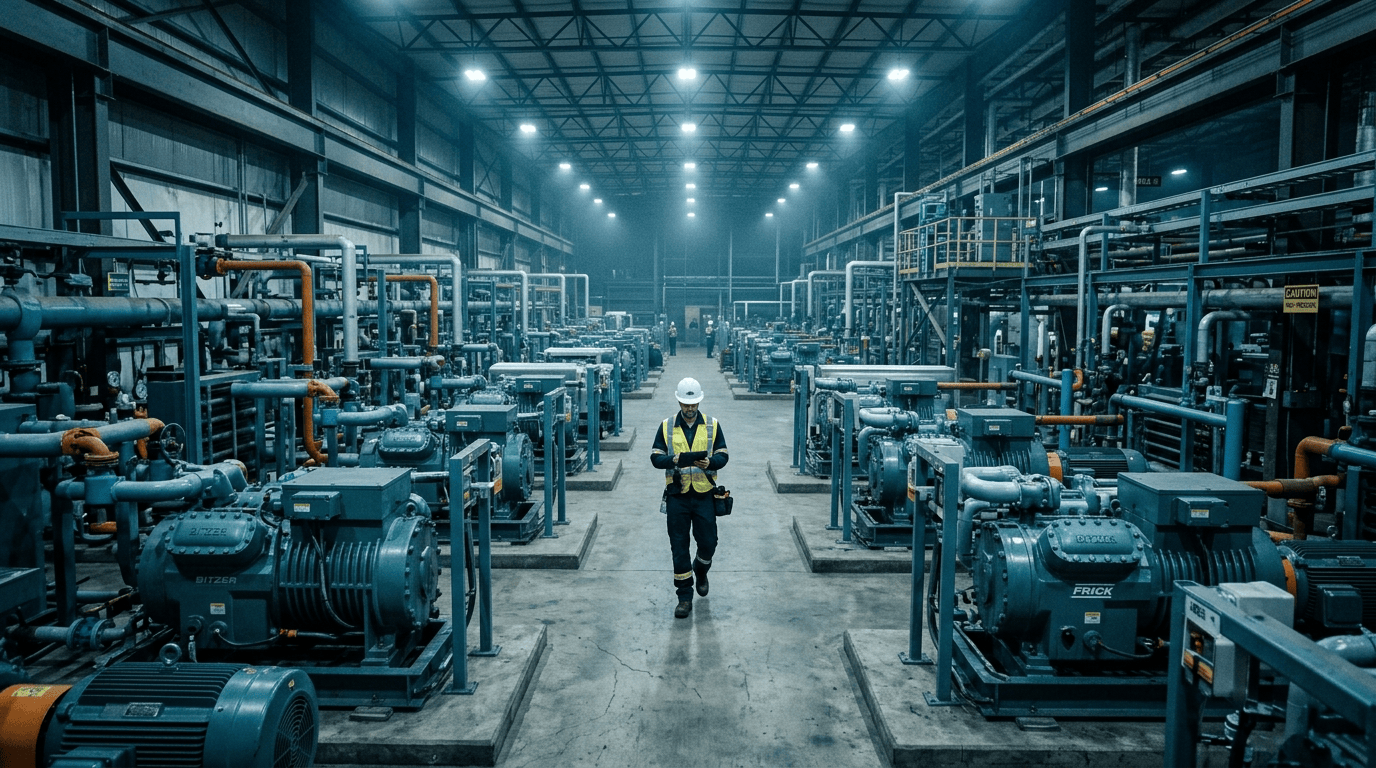
For most enterprise operations teams, the data problem is not a collection problem. Sensors are running. PLCs are logging. SCADA systems are generating records around the clock.
The real problem is that industrial IoT analytics, the process of turning live data into decisions that actually change how a facility runs, has never kept pace with the data being produced.
Managing a single site is hard enough. Managing dozens of them, each with its own equipment configuration, control logic, and team habits, is a fundamentally different challenge. The question most multi-site operations leaders are quietly wrestling with is not "do we have data?" It is "why is all this data not making us faster or more consistent?"
This guide covers what industrial analytics and data analytics are, why they matter at scale, and what separates data analytics that informs from data analytics that actually governs performance across a portfolio.
What Industrial IoT Analytics Actually Means
Industrial analytics refers to the discipline of collecting, structuring, and interpreting industrial data from operational systems to improve how those systems perform.
Industrial analytics refers, in the broadest sense, to any data analytics process applied to the information generated by industrial assets: equipment, processes, facilities, and the people who run them.
The industrial internet of connected assets, from compressors to chillers to conveyors, is the source layer that makes this possible. IIoT devices installed directly on industrial machinery, IoT sensors embedded in equipment, connected edge gateways, and smart meters made it possible to capture granular, real-time data at a fraction of what it once cost. IIoT devices installed directly on industrial machinery, IoT sensors embedded in equipment, connected edge gateways, and smart meters made it possible to capture granular, real-time data at a fraction of what it once cost, the deployment landscape covered in this guide to Industrial IoT analytics.
What was previously available only through manual inspection of industrial machinery can now stream continuously from the plant floor, feeding industrial analytics solutions with the data they need to function at scale.
Industrial data analytics covers the full cycle: capturing data from equipment and sensors, normalization so raw data from different OEM systems is comparable, data analysis to surface patterns and anomalies in that raw data, and action; changes to setpoints, schedules, maintenance workflows, or energy strategy based on what the industrial data reveals.
That last step is where most platforms stop short. Collecting and displaying data is straightforward. Governing what happens because of it, consistently, across every site in a portfolio, is the harder problem, and the one industrial analytics solutions are increasingly built to solve.
Why Industrial Analytics Has Become Non-Negotiable
The industrial analytics market is projected to reach $78.8 billion by 2032, growing at a 19.1% annual rate. That growth is not driven by curiosity.
It reflects a hard operational reality: running a multi-site portfolio without industrial analytics solutions is a cost that compounds quietly, site by site, quarter by quarter.
Energy costs have climbed steadily across industrial sectors, and rate structures have grown more complex. Equipment maintenance strategies built on fixed schedules and manual walkthroughs are consistently outperformed by approaches that use real-time data.
For organizations managing large facility portfolios, the variance between a well-run site and an underperforming one represents a significant and often unmeasured cost.
Three forces make industrial analytics particularly urgent right now, and each is reshaping business models for how industrial operators manage energy, maintenance, and performance at scale.
Institutional Knowledge Is Walking Out the Door
Experienced operators who carried decades of facility-specific knowledge are retiring, and that intelligence needs to be encoded in industrial analytics solutions, not left in people's heads. When it isn't, the next generation of operators inherits undocumented systems, inconsistent practices, and a steeper learning curve at every site.
Utility Markets Have Become a Moving Target
Demand response programs and time-of-use rate structures now reward or penalize based on when energy is consumed, not just how much. Organizations without the data infrastructure to respond dynamically are leaving money on the table and, in some cases, paying premium rates they could have avoided.
The Performance Gap Between Adopters and Non-Adopters Is Widening
The gap between organizations that have invested in data analytics infrastructure and those that have not is starting to show up in cost-per-unit and equipment longevity metrics.
Operators who have adopted industrial analytics and automation are consistently pulling ahead of peers who have not, and the compounding effect of AI/ML and edge computing is accelerating that gap with each passing quarter.
The Visibility Gap: Data-Rich, Insight-Poor
Most enterprise industrial operators are not short on data. They are short on data analytics that connects across sites, stays current without manual intervention, and translates into decisions the whole team can execute consistently.
Why Multi-Site Data Stays Fragmented
The typical multi-site operation has control systems from several different OEM manufacturers, each with its own interface and data format. Comparing performance across ten sites requires exporting data from ten separate interfaces and reconciling them manually.
Alarm histories are siloed. Maintenance records live in spreadsheets or technician notebooks. Energy data arrives in utility bills with a 30-day lag.
These data silos are not a technology failure, they are an architectural one. When facilities are managed independently, data silos are the natural outcome. Each site accumulates its own raw data, stored in formats that do not talk to each other, interpreted by whoever happens to be on shift.
What Data Silos Actually Cost
Data silos keep information generated across an entire portfolio fragmented and invisible to the people responsible for governing the whole system. Breaking down data silos is, in practice, the first real deliverable of any serious industrial analytics program; and the prerequisite for data analytics that actually reduces downtime and improves operational consistency.
When data from every site flows into a shared data environment, the analytics team can compare data across the portfolio, validate data quality, and build data models that reflect how the entire operation performs rather than how one facility performs in isolation. That shared data foundation is what turns site-level data into portfolio intelligence.
The Pattern No One Can See
Leadership knows something is off at a facility when a crisis surfaces: a product loss event, an unexpected energy spike, a failed compressor. They rarely know about the weeks of gradual drift that preceded it. And when the same problem appears at three facilities in the same quarter, there is often no systematic way to recognize the pattern, let alone address it across the portfolio at once.
This is the gap CrossnoKaye built ATLAS to close. The ATLAS Enterprise Control Platform connects to existing OEM control systems across a portfolio, without replacing them, and creates a single, governed view of industrial data across every site. Alarm histories, energy trends, equipment performance, and maintenance records all flow into one platform, standardized and comparable. What was fragmented becomes visible. What was visible becomes actionable.
What are the Four Types of Industrial Data Analytics?
There are four distinct types of industrial data analytics: descriptive, diagnostic, predictive, and prescriptive, and they build on each other. Understanding which type is being applied is the key to understanding where industrial analytics actually creates value.
Where Industrial Analytics Solutions Create Value: Key Applications
The categories above describe the mechanics. In practice, here is where operations teams deploy industrial analytics solutions to change outcomes, and where data analytics pays for itself most clearly.
Energy Optimization and Waste Reduction
Energy is typically the largest controllable operating cost in an industrial facility, and one of the areas most sensitive to real-time data. Industrial analytics tools that track energy consumption at the equipment level can identify energy waste that aggregate utility bills never surface.
Combined with real-time data on utility rates, this creates the foundation for demand response programs and load-shifting strategies that cut costs and reduce peak demand charges. Industrial analytics solutions focused on energy optimization help teams optimize operations and reduce energy waste continuously, not just during scheduled reviews, a strategy laid out step by step in this guide to [cutting energy costs in cold storage].
Predictive Maintenance and Equipment Health
Predictive maintenance is the application most commonly cited as a driver of ROI in industrial environments. Shifting from calendar-based to condition-based predictive maintenance requires reliable industrial data and a data analytics layer that can identify trends against historical data baselines.
Proactive maintenance programs built on predictive analytics:
- consistently reduce downtime,
- extend equipment life,
- cut costs associated with emergency repair.
Proactive maintenance also reduces the burden on technician scheduling: teams arrive at sites knowing what needs attention, rather than diagnosing problems from scratch.
Every reduction in unplanned failures through proactive maintenance is a direct cost saving. Each avoided failure through predictive and proactive maintenance adds to the long-term ROI of the industrial analytics platform.
Alarm Management and Anomaly Detection
Industrial facilities generate enormous volumes of alarms. Without a structured industrial analytics layer, alarm fatigue becomes a genuine safety and operational risk.
Analytics-driven alarm management learns normal operating ranges, suppresses nuisance alarms, and surfaces anomalies that represent actual risk to production processes or product quality. The result is a smaller, higher-signal alert stream that the analytics team and operations staff can act on with confidence.
Portfolio Governance and Compliance
For organizations operating multiple manufacturing facilities, industrial analytics creates the infrastructure for portfolio-level governance: standardized performance benchmarks, auditability of who changed what and when, and visibility into variance between those manufacturing facilities.
This is particularly valuable when corporate standards need to be enforced consistently across manufacturing operations, not interpreted differently at each location.
Remote Troubleshooting and Issue Resolution
When industrial analytics is connected to the control layer rather than sitting above it, experienced engineers can diagnose and resolve issues remotely, without waiting for a technician to be dispatched to the site.
This helps with:
- reducing resolution time,
- cutting contractor costs,
- keeping the most experienced people available to address the highest-priority problems regardless of location.
Overall, remote troubleshooting allows for generating real cost savings across the portfolio.
Supply Chain and Production Performance
Industrial data analytics extends beyond the four walls of a single plant. When production processes are instrumented end to end, teams can identify trends in throughput, raw materials consumption, and manufacturing processes that inform supply chain decisions, from inventory positioning to vendor performance benchmarks.
Better product quality at the production level supports customer satisfaction and creates a more predictable cost structure. Supply chain teams with access to real-time data from manufacturing facilities can act on current industrial data rather than month-old reports.
Industrial analytics solutions that connect logistics network visibility with industrial data generate valuable insights and better quality output from manufacturing processes that other forms of business data simply cannot provide, supporting informed decisions across other resources tied to production.
What Industrial Analytics Looks Like Across a Real Portfolio
The conceptual case for industrial analytics is easy to make. The operational reality is more complicated, because most enterprise portfolios were not built for data analytics.
They were built site by site, with whatever control hardware was specified at the time, by contractors with no mandate to think about portfolio-level data consistency.
From Fragmented Visibility to Portfolio Control
Americold, one of the largest cold storage operators in the world, faced exactly this challenge.
Nick Green, Senior Manager of Refrigeration and Energy at Americold, described the situation directly: with over 20 different control systems across their network, corporate visibility required logging into each system individually.
There was no common view, no standard alarm taxonomy, and no way to push changes across sites without repeating the process at each location.
After deploying the ATLAS Enterprise Control Platform, the team consolidated industrial data into a single view and executed blanket changes across facilities.
During a major heat wave event in the Northeast, the ability to respond to coincident peak demand events at one facility translated to approximately $500,000-$600,000 in savings in a single month; a direct result of industrial analytics solutions translating real-time data into governed action.
Lineage Logistics: Setting Portfolio-Wide Stretch Targets
Lineage Logistics operates at an even larger scale, with nearly 500 facilities globally.
Eric Krupa, General Manager and Market Leader at Lineage, noted that the core challenge was having eyes across the enterprise; the ability to see what is happening across facilities that range from 40 years old to brand new, and to set stretch targets for energy and maintenance performance that teams can be held to.
The ATLAS platform has delivered energy savings of 20-30% at select Lineage facilities.
These are not stories about analytics as a reporting tool.
They are stories about industrial analytics as the foundation for portfolio governance, the difference between knowing what is happening and being able to act on it systematically.
Energy Cost Reduction: The Analytics Use Case With the Clearest ROI
Energy optimization has become the analytics application with the fastest, most measurable return for industrial operators. The reason is structural:
- energy costs are visible,
- utility bills create a natural benchmark,
- levers for reducing consumption (load scheduling, demand response participation, setpoint optimization) are well understood.
What industrial analytics solutions add is the ability to execute those levers continuously and automatically, rather than relying on periodic manual review.
A system running on accurate real time data can detect energy waste when a refrigeration load draws more power than ambient conditions require, adjust compressor staging, and respond to a utility pricing signal; all without operator intervention.
Reducing energy waste at this level requires industrial analytics that act on real time data, not analytics that surface a weekly report for human review.
The Energy AI application from CrossnoKaye embeds this logic directly into the control layer. It analyzes external conditions, utility rate structures, and system state simultaneously, then executes an optimized energy strategy without manual input.
Customers have seen an average of 21% reduction in energy costs, with some facilities in specific rate environments achieving significantly higher savings. Reducing energy waste at portfolio scale requires industrial analytics solutions capable of governing execution, not just generating recommendations.
The key distinction from traditional approaches is that this industrial analytics is not advisory. It does not produce a report recommending that an operator reduce consumption during peak hours. It executes the reduction within the system's operational constraints, logs every action for audit and review, and helps teams reduce downtime caused by overloaded systems during high-demand periods.
See how ATLAS handles energy optimization across your portfolio. Contact CrossnoKaye to learn more.
From Reactive to Predictive: How Industrial Analytics Changes Maintenance
Reactive maintenance and fixing things when they break is the most expensive way to run a multi-site portfolio. Equipment failures under load are more damaging than controlled shutdowns. Emergency repair visits carry premium labor and parts costs. And in temperature-controlled environments, a failed system means product risk, not just downtime.
How Predictive Maintenance Works in Practice
Industrial analytics changes this by giving teams visibility into equipment health trends rather than just failure events. Predictive maintenance programs built on industrial data analytics track raw data from equipment (discharge pressure trends, motor current draw, refrigerant superheat) against historical data baselines to catch problems before they become failures.
When predictive maintenance is embedded in industrial automation, it shifts the entire maintenance model: instead of managing failures reactively, operations teams use real time data to reduce downtime systematically.
Proactive maintenance programs built on this foundation consistently succeed at minimizing downtime, improving product quality, and cutting costs across manufacturing processes.
What the Shift Looks Like at Scale
CrossnoKaye customers using the ATLAS platform resolve 15-20 issues remotely per month that would previously have required an on-site visit. Across a portfolio, that translates to 50% fewer contractor trips and 39% of total maintenance time handled remotely.
The after-hours call volume drops too; a 20% reduction in after-hours calls is a consistent outcome when teams move from reactive response to proactive maintenance supported by industrial analytics solutions.
Minimizing downtime through proactive maintenance has a compounding effect: each avoided failure protects product quality, preserves equipment life, and reduces strain on the maintenance team.
Certified Industrial Partners, a refrigeration contractor managing facilities for multiple enterprise clients, described the shift this way: instead of arriving at a site blind, technicians now arrive knowing what the system has been doing for the past 30 days.
The result, according to Joe Guevel, CFO and COO at CIP, is faster decision-making, better consulting, and the ability to help customers make portfolio-level decisions from a single view.
See how operations teams are achieving these results in practice.
Industry 4.0, Digital Twins, and Advanced Analytics
Industrial analytics sits at the center of a broader digital transformation, a shift that Industry 4.0 frameworks describe as the convergence of physical operations and digital intelligence.
For organizations already running industrial analytics solutions, this is not a future state. The digital transformation from reactive to data-driven industrial automation is already underway.
Most enterprise portfolios move through four stages:
Each stage builds on the last. New technologies (edge computing, AI/ML, and advanced analytics) are being deployed across industrial environments today, running on the same infrastructure that controls production processes and governs energy strategy.
Digital Twins
A digital twin is a continuously updated virtual representation of a physical system: a compressor, a refrigeration circuit, or an entire facility. By mirroring real-time data from field instruments into a software model, teams can simulate changes and validate control strategies before applying them to live equipment, absorbing the trial-and-error that would otherwise happen on production systems.
At portfolio scale, digital twins shift the comparison from site versus site to site versus optimal. The gap between the twin model and the actual system becomes a continuous efficiency measure, visible in real-time data, actionable through the control layer.
By combining live data with synthetic data generated from physics models, digital twins can project failure scenarios before they appear in the real system, opening new capabilities for risk management and capital planning.
Machine Learning and Advanced Analytics
Machine learning gives industrial data analytics the ability to process large datasets that no team could work through manually; detecting patterns across manufacturing processes, energy systems, and maintenance workflows that simpler statistical models miss.
The combination of deep learning and domain-specific industrial data enables advanced analytics platforms to catch the subtle drift patterns that precede equipment failures by weeks, not hours.
The distinction that matters for operations leaders is between AI/ML that advises and AI/ML that acts.
Advanced analytics embedded in the control layer identifies a fault, cross-references it with historical and real-time data, adjusts operating parameters, and logs every step; all without manual intervention. Edge computing makes this actionable at the facility level by processing data closer to the equipment, eliminating the latency of a round-trip to the cloud— a distinction explored further in how edge and cloud analytics divide the work across industrial equipment.
What This Means for Your Analytics Team
Modern industrial analytics solutions handle the data preparation work that once consumed most of an analytics team's time, freeing technical staff to focus on building models and generating insights.
Data lakes are increasingly central to this shift, consolidating data generated across production operations, supply chain systems, and site infrastructure into a unified environment deep enough for ML model training. Without that foundation, industrial analytics solutions are limited to shallow, site-specific analysis.
The organizational implication: the skills that drive value from industrial analytics, data science, AI/ML, and operational domain expertise sit at an intersection most organizations are still building. Treating industrial analytics as infrastructure rather than a project is what allows those capabilities to compound over time.
The Layer Most Industrial Analytics Platforms Skip
There is a meaningful difference between an industrial analytics platform that sits on top of operations and one embedded in the control layer. The first gives teams better visibility. The second gives them governed control.
Most enterprise portfolios cannot afford a rip-and-replace approach to controls infrastructure. Facilities have existing OEM equipment that works, PLCs tuned over years, and teams that know how to operate those systems.
The realistic path to industrial automation at scale is a platform that connects to what already exists; standardizing the data layer without replacing the hardware layer. Industrial analytics solutions that require full infrastructure replacement before delivering value are not solutions for most enterprise operators.
This is the architecture ATLAS is built on. It integrates with existing OEM systems across the portfolio, applies a common industrial data model and naming convention, and adds a governed control layer on top.
Teams can see and act on industrial data from a 40-year-old compressor and a brand-new system through the same interface, with the same role-based access controls and audit trail. Standards set at the corporate level propagate to every site. Changes at any site are logged, attributable, and reviewable.
The governance layer matters as much as the data analytics layer. Data without accountability is just observation. Governed control means the actionable insights industrial analytics produces translate into actions that are consistent, permissioned, and auditable; not interpreted differently by whoever happens to be on shift.
This is where industrial analytics solutions that only optimize operations through reporting fall short: they surface actionable insights from industrial data, but they leave the governance gap open.
How to Evaluate Industrial Analytics Solutions for a Multi-Site Portfolio
Not all industrial analytics platforms are built for enterprise scale. Evaluating industrial analytics solutions for a multi-site portfolio requires looking past feature lists and asking harder questions about architecture, data analytics depth, and governance capability.
The data analytics layer, how industrial data is collected, normalized, and acted on, is where most platforms show their limits. A platform that cannot normalize data from legacy equipment cannot provide reliable data analytics at the portfolio level, and data analytics built on inconsistent data produces decisions that cannot be trusted.
Does It Work With What You Already Have?
Industrial analytics solutions that only work with their own hardware require full capital investment before delivering any cost savings. The right platform integrates with existing OEM systems without rip-and-replace, and supports portfolio-level visibility across all manufacturing facilities in a single interface. Site-by-site login does not scale; the ability to see and act across every site from one view is foundational to any serious data analytics program.
Does It Govern, or Just Report?
Industrial analytics tools that only surface recommendations require manual follow-through at every step. They cannot reduce downtime or optimize operations at the speed that industrial automation enables. The platform needs to connect analytics to execution, with role-based access controls, change attribution, and audit logs that are compliance requirements in industrial settings, not optional features. Real industrial automation requires execution authority when conditions change.
Is It Enterprise-Grade on Security and Compliance?
SOC 2 compliance is the baseline for enterprise-grade data analytics software. Cloud-based data platforms handling operational technology data must meet this standard.
For industrial refrigeration operations, IIAR publishes widely used technical standards and guidance for safe and efficient system design and operation.
What Does Implementation Actually Look Like?
Deploying industrial analytics solutions is a change management initiative. The vendor's approach to operator adoption, integration with new technologies, and ongoing support matters as much as the feature set. New technologies for monitoring, control, and analytics should be deployable without a full platform replacement, because the pace of change in industrial environments means the platform needs to evolve alongside the operation.
Frequently Asked Questions
What is the future of AI/ML and machine learning in Industry 4.0?
AI technologies like machine learning are moving from predictive to prescriptive and autonomous capabilities across industrial environments. The near-term development is agentic AI, industrial analytics solutions that do not just surface recommendations but execute responses to changing conditions without operator initiation. In energy management, this means data analytics platforms that continuously re-optimize load strategy as real-time data shifts.
In proactive maintenance, it means systems that detect and remediate minor faults before they require human intervention. The longer-term trajectory, central to Industry 4.0 thinking, points toward a future state where AI ML models trained on industrial data across a portfolio generate informed decisions that no single-site analytics team could produce independently.
The convergence of AI/ML, digital twins, and advanced analytics platforms represents the next wave of industrial automation, one that will continue to reduce downtime, optimize operations, and strengthen the data analytics foundation that multi-site operations depend on to remain competitive.
What is the difference between SCADA systems and industrial analytics platforms?
SCADA (Supervisory Control and Data Acquisition) systems are built primarily for supervision, monitoring, and control of operational processes. Industrial analytics platforms sit alongside or above those systems, normalizing data across sites and applications to support benchmarking, optimization, and governed decision-making. In the levels described by the Purdue Model, SCADA belongs to supervisory control while analytics platforms operate at site operations and above.
In practice, modern platforms like ATLAS sit above SCADA and OEM systems, applying industrial analytics, including predictive maintenance, energy optimization, and prescriptive analytics, to data those systems already collect, without replacing them.
How does industrial analytics support compliance and governance at scale?
Industrial analytics platforms with governance capabilities maintain a complete, time-stamped record of every change made to setpoints, control strategies, and system configurations across all sites. This means corporate teams can audit who changed what, when, and from where, a capability that manual or site-by-site control environments and basic data analytics tools cannot provide.
Role-based access controls ensure that operators, engineers, and executives each have appropriate levels of visibility and change authority. When regulatory or insurance reviews require documentation of how a facility portfolio has been managed, governed industrial analytics provides the evidentiary trail that self-reported records cannot.
Can industrial analytics work with legacy equipment and existing OEM control systems?
Yes, and this is one of the most important evaluation criteria for enterprise portfolios. Industrial analytics solutions built on modern architecture can integrate with existing PLCs, OEM systems, and legacy equipment without requiring hardware replacement.
This matters for predictive maintenance in particular: the value of predictive maintenance depends on having continuous raw data from all equipment in the portfolio, not just the newest systems.
The ATLAS platform connects to systems ranging from decades-old equipment to recently installed controls, applying a common industrial data layer that makes all of it visible and governable through a single interface. This integration-first approach is what makes portfolio-wide predictive maintenance and industrial automation achievable without the capital cost and disruption of a full infrastructure replacement.
Analytics Without Execution Is Just Reporting
Industrial analytics is not a visibility project. Visibility is the starting point. The value is in what happens after industrial data is collected and structured; the consistency of action it enables, the variance it eliminates, and the efficiency gains it produces as industrial analytics solutions scale across a portfolio.
Organizations that embed analytics into the control layer, where it governs what changes, who can change it, and what the system does in response to real-time data, build infrastructure that gets more capable over time, not just more informed. That is the difference between data analytics that generates insights and industrial analytics solutions that actually reduce downtime, cut costs, and govern performance at scale.
The technology exists, runs on top of existing infrastructure, and is already producing measurable results for operators managing some of the most complex industrial portfolios in the market. The question is not whether to invest in industrial analytics solutions, it is which platform is built to govern performance at the scale you need.
Ready to see how governed industrial analytics works in practice? Connect with the CrossnoKaye team.

Stay Connected
Subscribe to stay in the loop on the latest industry news.
Related Posts
.png)